
Shift planning event employees: This is how you plan your staff stress-free
Good shift planning for your event employees is the foundation for every successful event. This ensures that the right people are in the right place at the right time. Without a clear plan? Pure chaos, overworked colleagues and gaps in staff. Not only do you risk dissatisfied...
If you are choosing between several solutions for event teams, the Swiss shift-planning software comparison shows which features really matter for flexible assignments.
A good one Shift planning for your event employees is the foundation for every successful event. This ensures that the right people are in the right place at the right time. Without a clear plan? Pure chaos, overworked colleagues and gaps in staff. You not only risk unhappy employees, but also the success of your entire event.
Why good shift planning is crucial for events
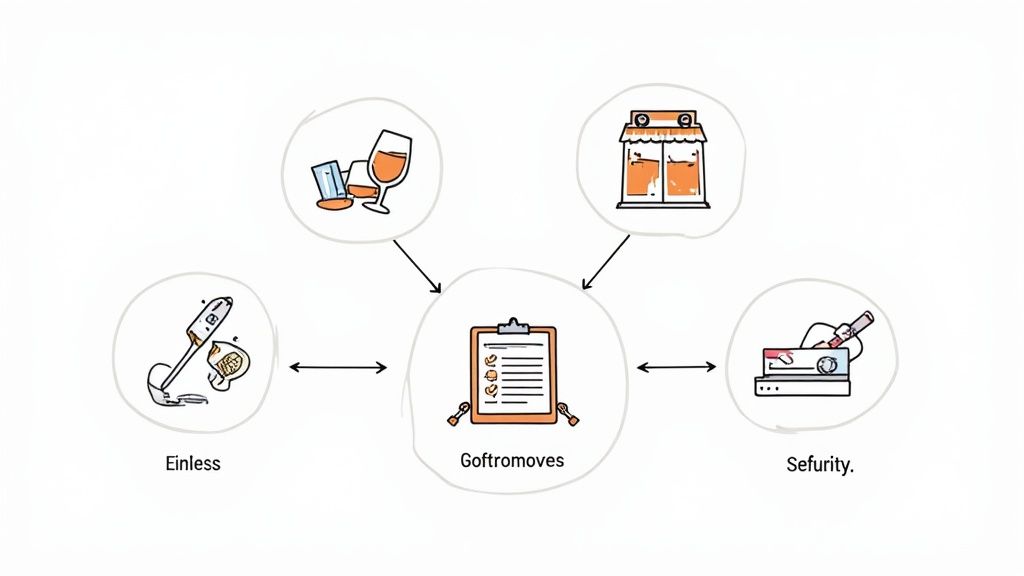
Imagine you are organizing a large music festival. The entrance opens and hundreds of visitors stream onto the site at the same time. At exactly this moment, the concession stands must be manned, the VIP lounge must be manned and the security forces must be positioned at the critical points. If there is a lack of staff in just one place, it quickly becomes hectic. Well thought-out shift planning prevents exactly this stress.
The special challenges in the event industry
Unlike everyday office life, the event industry is characterized by unpredictable peaks and rapid changes. Your staffing needs can change in minutes - for example, if an unexpected number of guests order at a bar or the weather turns and additional helpers are needed to set up rain protection.
Good planning takes this dynamic into account right from the start. It's not just about filling layers. It's about being able to react flexibly.
A few typical challenges that you know from practice:
- Short-term changes: Employees are absent due to illness or the event schedule is suddenly postponed.
- Different qualifications: You don't just need "staff", but specifically people with first aid certificates, foreign language skills or experience in service.
- Complex Schedules: Setting up, running and dismantling an event often requires completely different shift models - from long set-up days to short, intensive deployment times during the main event.
Excellent shift planning for event employees is not just an administrative act. It is a strategic tool that directly determines the quality of the guest experience and the performance of your team.
Lay the foundation for success
If you plan carefully from the start, you will lay the foundation for a smooth process. You know exactly how many employees you need for which task and avoid unpleasant surprises.
Back to the music festival, this means a realistic assessment for areas such as:
- Entry control: How many people do you need at peak times?
- Gastronomy: How many teams have to work on the bars and food trucks?
- Security: Where do security employees have to be posted and when do they need reinforcements?
This initial needs analysis gives you the security you need. On this basis, in the next steps you can create a detailed and fair shift plan that will make your event a success.
Determine staffing needs and necessary qualifications
Before you put a single shift on a calendar, you need to be crystal clear about who you actually need. And it's not just about having enough hands on board. It's about the right hands for the right tasks to find.
A superficial count - "I need ten people at the bar" - is guaranteed to lead to problems. What if there are suddenly international guests at this bar and none of the ten employees speak English? This is exactly where the real work begins: the detailed needs analysis.
From the sheer number to the required ability
Imagine you are planning a big company gala. Instead of just checking off positions, you break down the tasks into the skills that are really needed. That's what she does Shift planning for your event employees much more precise in one fell swoop.
A simple overview could look like this:
- Reception: 5 people. At least 2 of these must speak fluent English for international guests. A person should also have experience in dealing with VIPs in order to confidently greet the guests of honor.
- Wardrobe: 3 people. They need one thing above all else: organizational talent. You have to stay on top of things even in the most hectic phases.
- Service: 15 people. Everyone needs basic gastronomic knowledge. On top of that, you need 3 team members with solid bartending experience and at least 2 people with a valid first aider certificate spread around the room.
- Technology: 2 people. They have to really know the built-in light and sound system, not just a little.
This approach transforms your personnel planning from a pure question of quantity into a question of quality.
The qualifications overview is the heart of the matter
The next step is to compare these requirements with the skills of your team. Create a simple list or table in which you record the qualifications of your employees. This can be a simple Excel file or a function in specialized software – the main thing is that you have an overview.
It is important not to just ask for official certificates. There are often valuable talents lying dormant in the team that you don't know about. Does anyone have a hidden passion for photography or speaks Spanish fluently? Such skills can unexpectedly be worth their weight in gold at an event.
This approach is particularly crucial in the Swiss events industry, which relies heavily on a mix of permanent and temporary staff to cushion peaks. A clear overview of qualifications is the core of your entire planning. Find out more about how to make your Master operational planning cleverly can. With this information, you can optimally fill each position and lay the foundation for a smooth process. This way you can ensure that your event not only works, but also leaves a lasting, positive impression on your guests.
Create the perfect shift plan and communicate it with crystal clarity
Okay, you have analyzed the personnel requirements and know exactly what qualifications you need for your event. Now comes the really tricky part: putting all these puzzle pieces together into a shift plan that works, is fair and that everyone understands. It's not just about filling gaps. A good plan distributes the workload fairly and keeps your team motivated.
The following infographic summarizes the process from the initial analysis to the final assignment of qualifications.
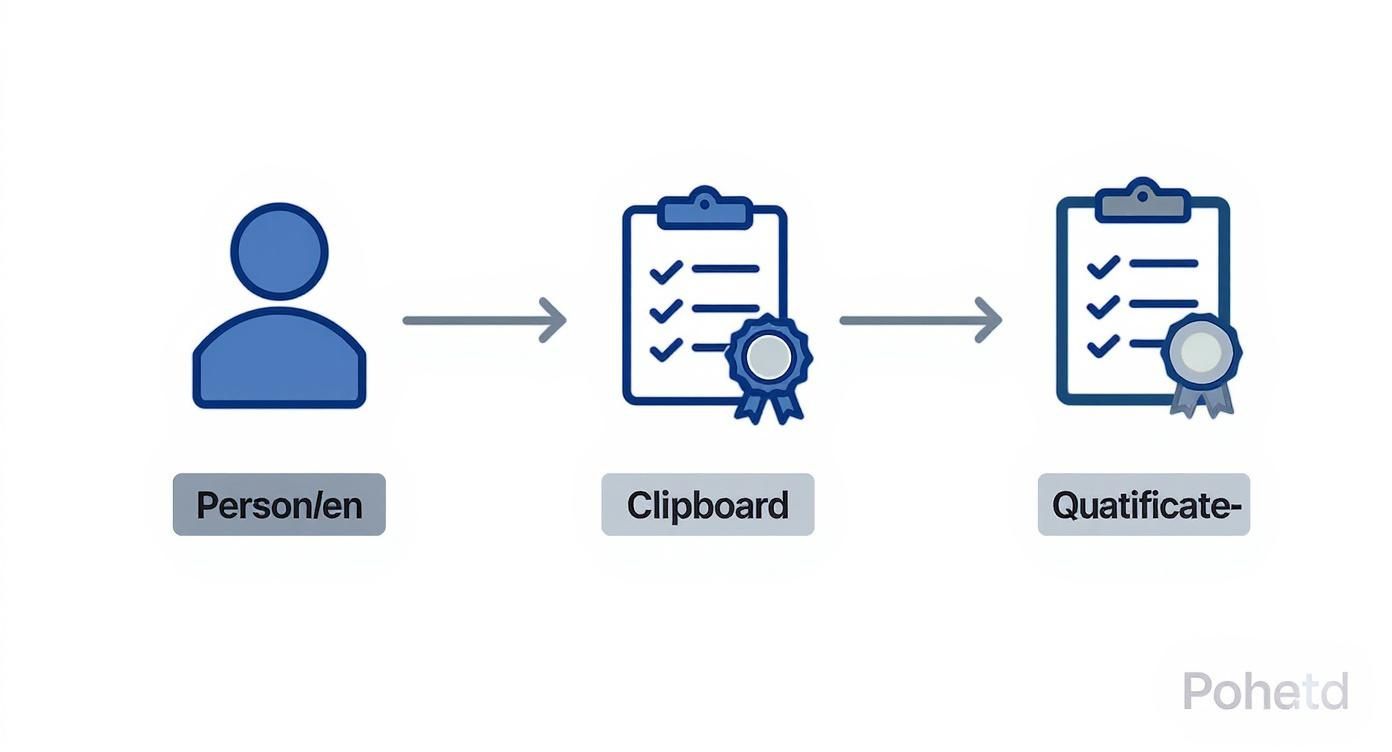
You can see that very nicely here Shift planning for event employees follows a clear logic: first you define the number, then the specific tasks and finally the skills required for them. This chain is the key to success.
Common shift models for events – here’s how to use them correctly
Rigid “nine-to-five” thinking has no place in the event industry. Depending on the phase your event is in, you need completely different shift models.
Let's imagine a typical day festival:
- The construction day: Long, continuous shifts are required here to really get things moving. A classic morning shift from 7:00 a.m. to 3:00 p.m and a late shift from 2:30 p.m. to 10:30 p.m are often ideal. The short overlap in the middle is worth its weight in gold for a clean handover.
- The day of the event: Now it's getting hot. The shifts must cover the absolute peak times. Your best tool here is overlapping layers. A solid core layer provides protection throughout the day, while shorter "peak time layers" - for example from 6:00 p.m. to 1:00 a.m – bear the brunt of the load in the evening.
- The dismantling: Similar to the setup, only mostly at night. A long night shift is often the best solution to quickly get the area swept clean again.
A fair shift schedule is more than just a logistical masterpiece. It shows your team appreciation. Make sure that unpopular shifts, such as night-time dismantling, are rotated fairly within the team. Nothing kills morale faster than the feeling of always getting the jobs you don't like.
For inspiration, you can also look at working time models like this Introduction of the 4-day week view. Shift work is widespread in Switzerland anyway. Flexible and compliant plans are therefore crucial to minimizing the burden on everyone - especially in an industry known for its long work weeks.
Communicate the finished plan to your team in an understandable way
The most brilliant plan is worthless if no one understands it or if it simply doesn't reach people. Communication is at least as important as the creation itself.
Choose the right channel for your team:
- E-mail: The good old classic. Perfect for official sending, but a disaster for quick, last-minute changes.
- Messenger groups (e.g. WhatsApp): Unbeatable for quick updates and short-term arrangements directly on site. But be careful: important information can quickly get lost in the chat chaos.
- Specialized employee apps: This is the professional league. Everyone has their plan directly on their cell phone, receives automatic reminders and can request shift swaps or changes directly in the app.
No matter which channel you choose, the information must be complete. A well structured one Excel template for your shift plan is often a great first step to capture all the details clearly. Very important: Make sure that every employee actively confirms their shifts. A simple “read and understood” message is often enough to clear up misunderstandings right from the start.
Simplify shift planning with the right software
Anyone who has ever tried to plan a larger event with a confusing Excel spreadsheet knows the pain. Mistakes creep in, communication becomes a full-time job and valuable time that you would need for the event itself is simply lost. This is where modern planning software can make the crucial difference.
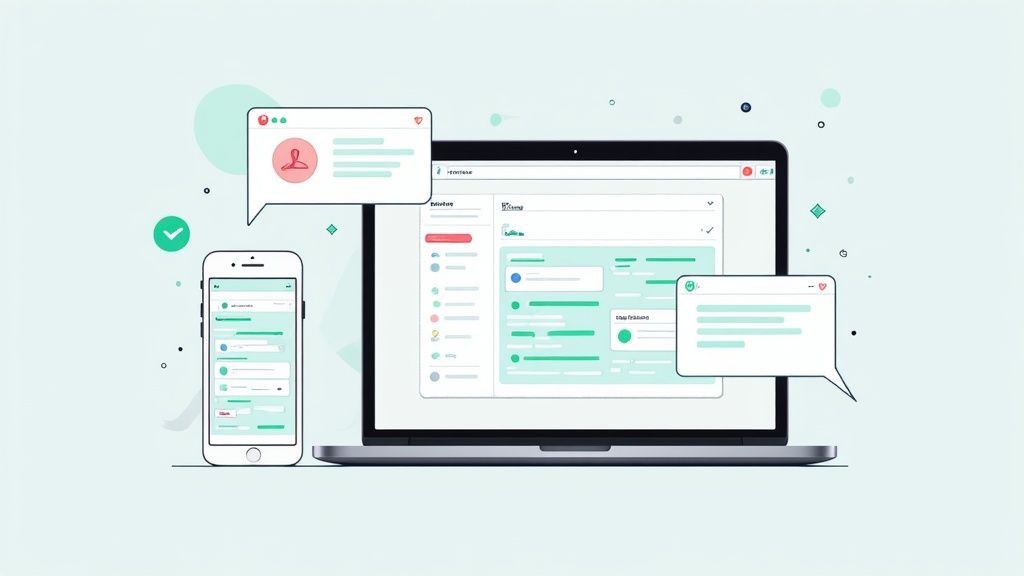
Good tools not only speed up the entire process, but also reduce sources of error to an absolute minimum. Imagine you are planning an event 50 employees. Manually this means sending dozens of emails, laboriously transferring availabilities to a list and informing everyone of every single change. Not only is this incredibly time-consuming, but it's also practically an invitation for mishaps.
The jump from manual to automated
A specialized software for the Shift planning of event employees does all this work for you. The system can independently compare availabilities, take into account the qualifications stored and create legally compliant plans at the push of a button without you losing track.
Let's take a closer look at the differences at an event with 50 employees:
Comparison of manual vs. automated shift planning
A comparison of the main differences when planning shifts for an event with 50 employees.
| aspect | Manual planning (e.g. Excel) | Automated planning (software) |
|---|---|---|
| Time expenditure | Several hours to days | A few minutes to hours |
| Source of error | High (e.g. double bookings, incorrect qualifications) | Low (automatic checks) |
| communication | Awkward (email, calls, messenger) | Centralized (automatic notifications in the app) |
| flexibility | Low (changes are very complex) | High (quick adjustment possible in the event of failures) |
As you can see, professional software is much more than just a digital calendar. It becomes the central control tool for your entire team. Modern systems are designed to map even complex shift models - from simple two-shift to five-shift systems - in a needs-oriented manner and taking employee wishes into account.
What you should look for in planning software
Not all software is the same. Especially in the dynamic event industry, there are a few functions that make your life a lot easier.
Be sure to pay attention to these points when making your selection:
- Mobile app for employees: Your team can enter availability directly on their smartphone, view shifts and be informed of changes via push notification. This is standard today.
- Automatic notifications: Is someone unavailable at short notice? The plan changes? The system automatically informs all affected people. No more calling around!
- Integrated time tracking: Employees clock in and out directly via the app. This saves you manual entry and makes payroll a breeze.
- Qualification filter: You can specify that only employees with a specific skill (e.g. "First Responder" or "Barista Certification") can be scheduled for a specific shift.
Switching to software often pays off faster than you think. The reduced administrative effort and the avoided errors caused by incorrect planning not only save nerves, but also money.
Whether such a solution is worthwhile for you depends of course on the size of your events and your team. A good one Personnel deployment planning software comparison especially for Swiss SMEs can be a good support for you in your decision. My experience shows: At the latest when you regularly eat more than 15 to 20 people coordinate, the advantage of an automated solution is clearly noticeable.
Remain flexible and respond to unforeseen changes
Even the best-thought-out shift plan is only as good as its ability to respond to the unexpected. The only constant in events is change. So what do you do when a key worker calls with a fever in the morning or a sudden rush of visitors requires double the bar staff?
This is exactly where emergency management begins. A forward-looking one Shift planning for event employees prepares you for exactly such moments. It's about having a plan B in your pocket before you even need it.
Set up a jumper pool as security
One of the most proven methods for responding to short-term outages is to build a springer pool. These are reliable employees who agree in advance to step in at short notice if necessary. The big advantage: You don't have to pay them on-call for the entire event, which saves your budget.
Instead, you can work with small incentives that have proven themselves in practice:
- A small standby fee: A fixed, manageable amount just for being ready that day.
- Higher hourly wage for use: If the person actually steps in, they will receive a more attractive salary for this shift than their regularly scheduled colleagues.
- Preference for future events: Anyone who acts reliably as a jumper will be the first to be offered the best shifts in the next planning. That motivates enormously.
This pool is your first line of defense. If an outage occurs, you don't have to panic and start making wild calls, just activate the next person on your list.
Define the communication chain for an emergency
When things have to happen quickly, every second counts. A clearly defined communication chain prevents chaos and ensures that the right people are informed immediately. Determine exactly who will be contacted, when and via which channel.
Let's imagine a typical scenario: Heavy rain suddenly sets in at your open-air concert. You immediately need five additional people to help set up rain shelters over the technical and catering areas.
Your reaction chain could look like this:
- The area manager on site reports the need: It sends a short message to you as the operations manager via a predetermined channel, for example a special messenger group. Message: "Heavy rain. Need 5 helpers for tents on the main floor. Urgent."
- You as the operations manager activate the jumper pool: You send a message to your jumper group: "Immediate deployment for approx. 3 hours on the main floor. Who can get in 30 minutes be here? There is a bonus of CHF 20.”
- The first five who accept get the job: You briefly confirm the deployment and inform the area manager that help is already on the way.
A cool head is your most important tool under pressure. Good preparation gives you the confidence to make the right decisions confidently and quickly, even in hectic moments.
This simple structure ensures that you don't have to think about what to do in an emergency. You simply follow a proven process. This way you can ensure that your event is a success even if everything doesn't go according to plan.
Frequently asked questions about shift planning at events
Finally, we would like to clarify a few questions that we often encounter in practice. These tips from the field will help you avoid legal pitfalls and keep your team happy.
What working and rest times do I have to observe in Switzerland?
In Switzerland, your most important compass is this Labor Act (ArG). It sets out clear guidelines, such as maximum weekly working hours, daily and weekly rest periods and special rules for night and Sunday work.
Sure, there are often exceptions in the event sector, but the basic protective provisions for your employees always remain in place. Also, don’t forget the ones that apply to your industry Collective employment agreements (GAV) to check - they can set up their own rules again.
By the way, complete and clean documentation of all hours worked is not only good practice, but also a legal obligation. Save yourself the trouble and be picky here from the start.
How do I deal fairly with employees’ shift requests?
Openness is the key here. Give your team the chance to communicate their availability and wishes as early as possible. A digital tool in which everyone can easily enter their preferences is worth its weight in gold and prevents paper chaos.
But also set clear deadlines by which the feedback must be received. Of course, you try to take their wishes into account as best as possible, but also be transparent if not every wish can be fulfilled. Most people understand this if the communication is right.
A fair rotation principle for unpopular shifts, for example during night-time dismantling, can do wonders for team satisfaction. This way, no one feels disadvantaged and the burden is distributed fairly.
Which tools are suitable for starting out on a small budget?
If you're just starting out or just coordinating small teams, you don't need to invest in expensive software right away. Well structured templates in Excel or Google Sheets are an excellent starting point. Combine them with a shared calendar and a fixed communication group, for example via Messenger.
There are also numerous free or very cheap entry-level versions of shift planning apps that cover the most important basic functions. But as your team grows and the events become more complex, you will quickly notice that the manual effort explodes.
At this point at the latest, you should consider switching to specialized software. This not only saves time and nerves, but also professionalizes your entire planning.
Would you like to take your shift planning for event employees to the next level and reduce administrative effort to a minimum? job.rocks offers you an all-in-one solution from availability queries to automated planning to mobile time recording. Discover now how to plan your team fairer and better than ever before. Find out more at job.rocks