
Personeelsmanagement in de evenementenbranche succesvol aanpakken
Meta description: Are you struggling with Excel lists and short-term assignments in human resources management in your event industry? Discover practical tips and digital tools here that will help you plan, find and retain your team efficiently in the long term. Personnel management in the event industry – that often feels…
Meta description: Are you struggling with Excel lists and short-term assignments in personnel management in your event industry? Discover practical tips and digital tools here that will help you plan, find and retain your team efficiently in the long term.
Human resources management in the event industry - it often feels like you're juggling countless balls at the same time. Short-term assignments, seasonal peaks and a colorful mix of permanent employees and freelancers collide. Anyone here with you? rigid structures and manual lists works, quickly notices: the system was made for a different world and creates more problems than it solves.
Why your Excel lists reach their limits
The event industry thrives on spontaneity. A big festival on the weekend, a trade fair during the week, a wedding in the evening – every occasion has completely different personnel requirements. Anyone who tries to keep track of things using Excel spreadsheets and email chains will inevitably lose touch.
Imagine a classic agency: Short-term personnel are needed for a promotional campaign in three cities at the same time. Planning begins in chaos. Who is actually available? Who has the necessary skills, such as a driving license or sales experience? Manually searching old lists is not only tedious, but also extremely error-prone.
The administrative nightmare
As soon as the staff has been found, the administrative work really begins. Contracts must be drawn up, sent and returned signed. Timesheets are filled out by hand and are often illegible or incomplete. At the end of the month, someone sits there for hours trying to convert this paperwork into a correct payslip.
This process is not only painfully slow, it is also risky:
- Billing errors: Incorrectly recorded hours cause frustration in the team and can quickly lead to legal problems.
- Lack of flexibility: If an employee is absent at short notice, the hectic search for a replacement begins via telephone and WhatsApp groups. This is pure stress.
- High communication effort: Important information about locations, briefings and contacts gets lost in endless email chains.
Managing human resources based on manual processes is like trying to conduct a live concert with sheet music blown by the wind. There is a lack of structure to be able to react to the unforeseen.
The mix of festivals and outdoors
A particular challenge is to coordinate a mixed team of permanent employees, part-time employees and freelancers. Everyone has different contract terms, hourly rates and availability. Without a central system, it is practically impossible to find the perfect staff mix for an event while keeping all legal requirements in mind.
The result? Either too much or too little staff is planned. One increases costs, the other endangers the quality of the event. A modern, digital solution is no longer an option today – it is a necessity. In the area of Workforce management for event and promotion agencies you will find many approaches to overcome exactly these hurdles. A digital approach creates transparency, almost eliminates administrative effort and gives you the security of having the right team at the start for every event.
Your path to a smart HR process in practice
Now it's time to get down to business. Forget the cumbersome paperwork and Excel lists of the past. Let's work together to create a modern, smooth workflow for yours Human resources management in the event industry build that really saves you time and eliminates sources of error.
Everything depends on a thorough needs analysis. For a big music festival you don't just need 200 people, but very specific skills. Who has a valid first aider ID card? Who can drive the forklift to set up the stage? And who speaks English fluently enough to look after the VIP guests?
Precisely determine staffing needs
Instead of a vague request like “helpers wanted!” By posting in a huge WhatsApp group, you can define your requirements razor-sharply. Create a clear profile for each individual role.
- Barkeeper: Must not only be able to pour beer, but also have experience with common cocktails and have a health certificate.
- Stage hand: Physical fitness is what counts most here. Experience in stage construction is a huge plus.
- Hostess: Excellent manners are a must, as are business fluent foreign language skills.
This precise planning is the basis for everything that comes afterwards. This is the only way to ensure that you don't just fill a gap, but rather... correct Find the person for the job. The manual approach, as many still practice, is a direct path to chaos.
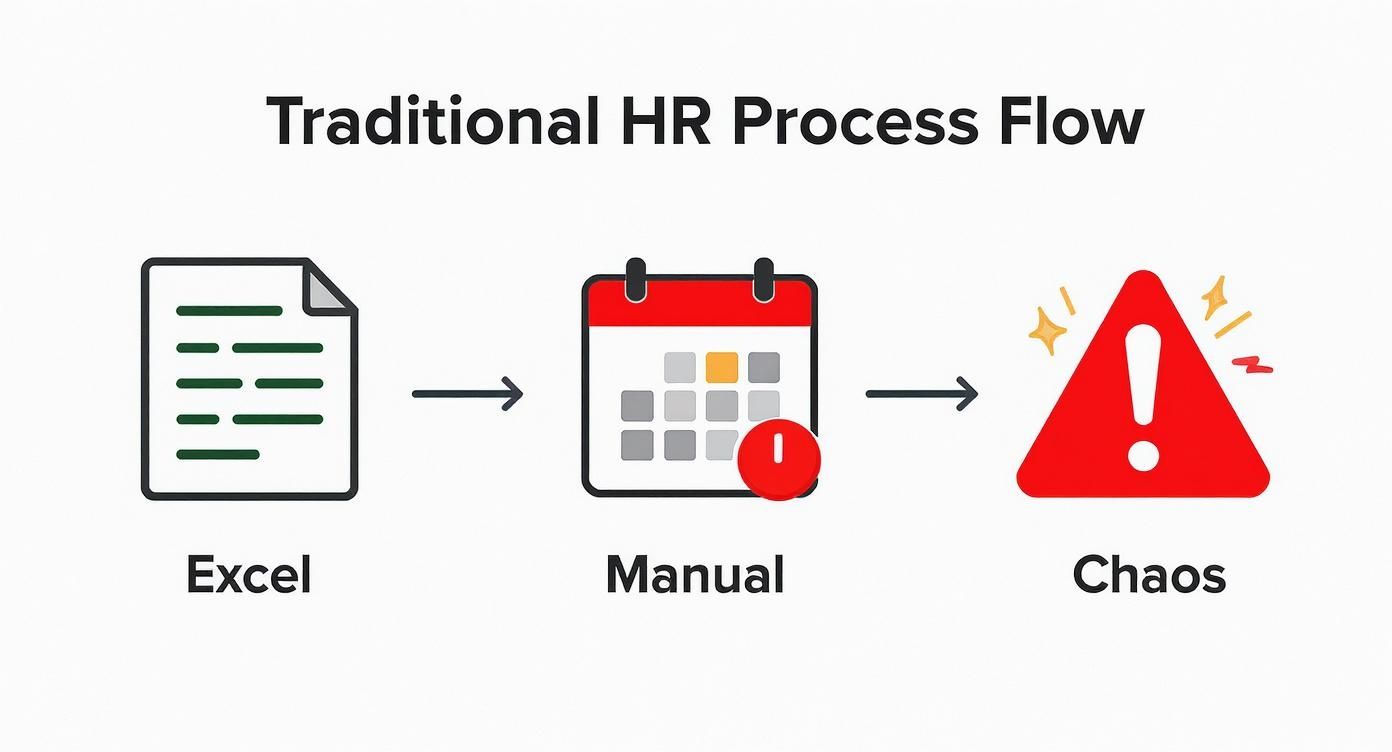
The graphic sums it up: confusing lists and manual planning steps inevitably lead to organizational chaos and expensive mistakes.
This table shows the direct differences and benefits of a digital approach over traditional, manual methods in event workforce management.
Manual vs. digital HR process in the event industry
| phase | Manual process (example) | Digital process (example) |
|---|---|---|
| Demand planning | Vague requests in WhatsApp groups, Excel spreadsheets. | Creation of precise, skills-based requirement profiles in the system. |
| Recruiting | Countless emails and calls, unstructured applications. | Targeted search in the talent pool, automated job requests to suitable profiles. |
| Induction | Printing, sending and manually collecting contracts & documents. | GDPR-compliant upload of documents by employees, digital signature. |
| Operations planning | Complex shift plans in Excel, confusing communication. | Drag-and-drop shift planning, mobile app for employees with all the information. |
| Time tracking | Handwritten timesheets, error-prone transfer to Excel. | Mobile time clock via app, automatic and error-free data capture. |
| Payroll | Manual calculation and laborious transfer of data to accounting. | Export the checked hourly data with one click for payroll transfer. |
The comparison makes it clear: A digital process is not only faster, but also more transparent, safer and significantly less prone to errors.
Filter skills digitally and find staff
Armed with your clearly defined profiles, you start your search for personnel - not by phone, but via your digital portal. Here you can search your talent pool specifically for the skills you require. A smart system even automatically suggests the most suitable candidates to you.
Imagine this: you lose an important sound engineer at short notice. Instead of frantically calling dozens of people, filter your database by “sound engineer” with availability on the day of the event. Within minutes, you'll have a list of qualified people to whom you can send a job request directly.
A digital talent pool is your greatest asset when faced with unforeseen changes. You no longer just react, but act with foresight and fill open positions in record time.
Smooth onboarding and contract management
As soon as your team is in place, training begins. And it’s completely digital and GDPR compliant away. The employee simply uploads all important documents such as ID cards, social security numbers or certificates independently. Employment contracts are signed directly online using a digital signature.
This not only saves tons of paper and postage, but also gives you absolute legal security. All documents are neatly stored in a digital personnel file and are always at hand. No more paperwork and missing documents on the day of the event.
Smart shift planning and mobile time recording
Operations planning is often the most nerve-wracking part Human resources management in the event industry. Good software takes the lion's share of the work away from you. You simply create your shift schedules using drag-and-drop and assign the shifts to the appropriate employees.
Your team will then see all relevant information directly in an app on their smartphone:
- When and where exactly is the location?
- Who is my local contact?
- Is there a specific dress code?
They can also use the app to enter their availability or – if you allow it – easily swap shifts with each other. This makes your planning incredibly flexible. Time recording also runs on a mobile app. At the start and end of the shift, employees simply clock in and out. These recorded times are the absolutely clean basis for error-free payroll.
At the end of the month, you can export the checked hourly data with just a few clicks and transfer it to your payroll department. This closes the circle: from demand planning to billing, the entire process is seamless, transparent and, above all, fast.
Find good people and retain them long-term
Every event depends on the team. Sure, everyone knows that. But how do you find not just anyone, but exactly the right people in a highly competitive market? And – almost more importantly – how do you ensure that they are happy to come back for you next time? A successful one Human resources management in the event industry is not magic, but the result of a clever approach.

Forget impersonal mass emails. You attract the best talent by getting to the point and showing what makes your job special. Instead of just listing dry requirements, paint a picture.
Imagine you need an experienced logistician for a large open-air festival. Instead of just demanding "experience in construction," make it tangible: "You are the linchpin of our main stage. You make sure that tons of technology and material end up exactly where they belong." This appeals exactly to those who are passionate about their job. If you want to go deeper into how to sharpen such profiles, we have a guide on how to do one here convincing requirements profile created.
Your own talent pool is worth its weight in gold
The true strength of many agencies lies in building their own, well-maintained talent pool. This is your personal database of people you can rely on. No more cold starts.
Every successfully completed project is an opportunity to expand this pool. Take notes: Who was late? Who has kept a cool head even under the greatest stress? Who has that one special ability that is rarely found? In this way, you can build up an invaluable network over time, and you can rely on well-known and qualified faces for your next planning.
How to retain your best people
Finding good people is one thing. To hold you, the other. Especially in our industry, where many work on a flexible basis, loyalty to your agency or location is the be-all and end-all.
A fair fee is the absolute basis, no question about it. But real loyalty comes from a working atmosphere in which you feel valued. Clear communication, honest feedback and the feeling of being an important part of the whole – that’s what counts in the end.
The topic of further training is also becoming increasingly important. The Swiss event industry is booming again, and according to the Event Trend Study Switzerland 2024 has increased almost half of the companies in the last two years. This trend will continue, which will further fuel the fight for skilled workers. When you invest in your team's skills, you not only ensure the quality of your events. You also send a clear signal: I'm counting on you for the long term.
To keep your crew engaged, you need a good mix of tangible and non-material incentives:
- Punctual and fair payment: That is the basis. Non-negotiable.
- Transparent communication: Clear briefings, timely information about operations. Nobody likes surprises shortly beforehand.
- Further development: Offer training, be it for new event technology, in the area of security or for dealing with demanding customers.
- Create a team feeling: Freelancers also want to be included. A final beer together or a short team breakfast before the big operation can work wonders.
In the end, well-thought-out personnel management not only ensures that you find the right people for every project. You build a strong network of professionals who are motivated and loyal - and who ensure the long-term success of your events.
The right tools for your personnel management
Honestly: a modern one Human resources management in the event industry Today it is almost impossible to manage without the right software. The right digital helpers not only save you administrative headaches, but also make your entire processes faster, more transparent and significantly less error-prone.
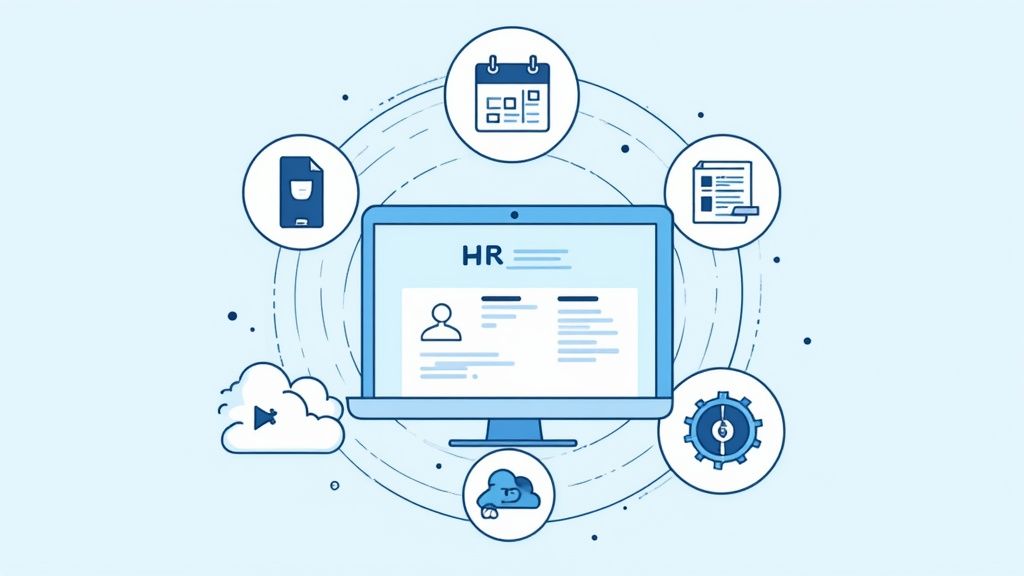
Imagine such a system as your central cockpit. Instead of jumping back and forth between countless Excel lists, email inboxes and WhatsApp groups, you have everything bundled in one place - from the first inquiry to the final billing.
What good HR software really has to be able to do
Software for the event industry is much more than a standard HR program. It is your digital nerve center, built specifically for the dynamic and often chaotic demands of events.
You should definitely pay attention to these core functions:
- Central talent pool: This is where your entire crew lives. You manage all contacts - from permanent employees to freelancers - including their skills, certificates and, above all, their current availability.
- Digital personnel file: All relevant documents such as contracts, copies of ID cards or health certificates are stored here securely and in accordance with GDPR. No more paperwork and dusty folders.
- Mobile app for employees: This is the direct line to your team. Using a simple app, they can report availability, view shift schedules and stamp their working hours. This reduces your communication effort enormously.
A practical example: You are planning a large trade fair and need support at short notice. Instead of typing dozens of emails, filter your talent pool by “Hostess with French skills” and send a job request to all matching profiles. The commitments tick in directly via the app – this is exactly what efficient work looks like.
Your compass when choosing a provider
The software jungle is huge. So that you don't lose track, you need a clear checklist to compare the different providers fairly and find the solution that really works for you you fits.
I know from practice: a medium-sized agency was able to significantly reduce its administrative tasks by introducing central software 40% reduce. This saved time flows directly into the quality of your events.
Approach your provider choice strategically and check these points very carefully:
- Specialization in the event industry: Does the provider understand the hectic pace? Does he know what short-term bookings and flexible staff pools mean?
- Capability and availability management: Can you filter specifically by skills and see availability in real time? This is an absolute must.
- Mobile functionality: Is the app intuitive for your team and does it cover everything from time tracking to direct communication?
- Automated processes: Does the software save you work? Think about automatic job notifications or preparing data for payroll.
- GDPR compliance: Is all data stored securely and in accordance with European data protection standards? There are no compromises here.
There are many digital helpers for fast, all-round personnel management, including: best AI solutions for medium-sized businesses, which can further simplify individual processes. However, the central building block remains specialized Operations planning software, tailored to the needs of your team. The right choice makes the difference between constantly reacting and acting confidently.
Make the success of your human resources management measurable
You can't improve what you don't measure. This old principle is in Human resources management in the event industry worth pure gold. It helps you move away from pure gut feeling and finally make data-driven decisions. Without clear key figures, so-called KPIs, you are flying blind and missing valuable opportunities to really improve your processes.
It's not about getting lost in a jungle of dozens of metrics. Focus on the few numbers that really tell you something about the state of your HR processes. A streamlined dashboard with the right KPIs is your best early warning system.
Which KPIs really count in the event industry
In addition to the usual HR classics like the fluctuation rate, there are a few event-specific metrics that you should definitely keep an eye on. They give you immediate, practical information about how quickly your planning is going and how satisfied your team really is.
Here are the metrics that make the difference in practice:
- Personnel costs per event: This number is your direct indicator of the planning quality. Compare costs between similar events - this will help you uncover outliers and allow you to set future budgets much more realistically.
- No-show rate: A classic that hurts. How many of your booked people end up not showing up? A high rate is a clear alarm signal and often indicates problems in communication, pay or general employee retention.
- Casting speed: How long does it take from the time the advertisement is advertised until a shift is finally filled? This period of time tells you a lot about the quality of your talent pool and how smooth your recruiting processes really are.
- Employee satisfaction: This is easier to measure than you think. Send out a short, anonymous survey after an event. A simple question like “Would you work for us again?” provides invaluable feedback.
The systematic collection of this data turns assumptions into facts. You recognize patterns before they become real problems and can take targeted countermeasures instead of just putting out fires.
Using data to really get better
Evaluating your KPIs gives you very concrete levers. For example, do you notice that personnel costs for a certain type of event regularly go through the roof? Then you have to question your planning. Maybe you need a different staff mix, or the shift lengths just aren't optimal.
Of course, the issue of money also plays a major role in staff retention. In Switzerland, salaries for event managers have a median of around 80,000 CHF quite competitive, but there are strong regional differences. Use this data to align your own compensation strategy with the market and not lose out in the fight for the best minds. Take a look at the current ones Salary structures in the Swiss event industryto see where you stand.
A fair salary is not just a cost factor - it is an investment that reduces fluctuation and sustainably improves your KPIs.
Frequently asked questions about human resources management in the event industry
Here are a few more answers to the questions we have Human resources management in the event industry meet again and again. Think of them as quick, tried-and-tested tips to get rid of typical hurdles.
How do I deal with very short-term personnel requests?
Honestly? Short-term inquiries are the norm in our industry, not the exception. The key is a well-maintained talent pool. If your entire staff is recorded in a central system with all skills and - very importantly - real-time availability, you can react to failures with lightning speed.
Instead of making panicked calls, filter your database for the skills you need and immediately see who has the time. An automated job request via an app sends the request to all suitable people at the same time. This way you fill the gap in minutes, not hours.
A flexible personnel strategy is not a luxury, but rather vital to survive in the dynamic event landscape. Spontaneity becomes a strength when your processes are designed for it.
What is the best way to pay freelancers fairly?
Transparency is key here. Set clear hourly rates or flat rates and communicate them from the start, without any ifs or buts. The most important thing is absolutely clean time recording that is understandable for both parties.
A mobile app that allows freelancers to check in and out using GPS stamps creates instant trust. This means there are no discussions about hours worked at the end of the month. Punctual and correct payment is and remains the greatest lever for long-term, good cooperation.
How can I retain my permanent staff despite seasonal fluctuations?
Yes, the event industry has its high and low seasons. Keeping your core team on task requires creative solutions that go beyond the paycheck. During quieter periods, offer targeted further training to expand your skills - you will also benefit from this later. Another good option: Involve your team in the strategic planning for the next season, which greatly strengthens the feeling of belonging.
More flexible working time models or the simple option of reducing overtime during quieter times noticeably increase satisfaction. Show your team that you invest in them even when there isn't a big event coming up.
The Swiss events industry has recovered strongly after the pandemic and is approaching pre-crisis levels again. This upswing only increases the need for qualified personnel and requires flexible HR strategies in order not to run into capacity bottlenecks. If you are interested in the details, you will find more in this Analysis of the Swiss MICE market.
Do you finally want to get your staff planning for events under control? With job.rocks You automate your processes from planning to billing, find qualified staff more quickly and reduce your administrative effort. Discover now how job.rocks makes your event business easier.