
Night-work supplement in Switzerland: your guide to correct payroll
Practical guide to when night work starts in Switzerland, which supplements apply and how to calculate them correctly.
In Switzerland, night work is clearly defined: work between 23:00 and 06:00 is officially considered night work. If you regularly work during this period, the Swiss Labour Act and many collective employment agreements provide compensation, usually as a wage supplement or additional time off.
What you need to know about night-work supplements
Working at night is not just a shifted timetable. It puts extra strain on body and mind, which is why Swiss rules protect employees and require fair compensation.

Legal basis and collective agreements
The Labour Act defines the night period, states that night work normally requires authorisation and sets minimum compensation. The official SECO information page is the key reference for working and rest times in Switzerland.
Collective employment agreements can go further: higher supplements, a longer night period such as 22:00–07:00, or additional rest days.
Key rules at a glance
| Aspect | Labour Act | Typical CEA rule |
|---|---|---|
| Night period | 23:00–06:00 | May be extended, e.g. 22:00–07:00 |
| Supplement | At least 25% for temporary night work | Often 25%, 30% or 50% |
| Time compensation | 10% for permanent night work | May be replaced or complemented by pay |
| Entitlement | Depends on temporary or permanent night work | Can apply from the first night hour |
What the Labour Act says
If you work fewer than 25 nights per year, this is temporary night work and must generally be paid with a 25% wage supplement. From 25 nights per calendar year, it is permanent night work and the law primarily provides a 10% time compensation.
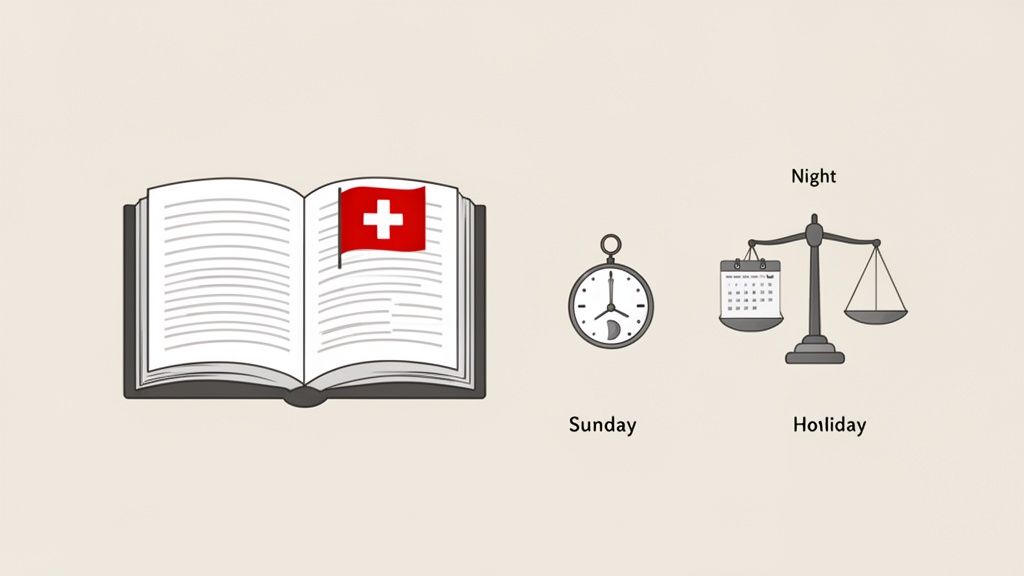
Do not confuse night supplements with Sunday or public-holiday supplements. If a night shift falls on a holiday, both may apply. Correctly calculating daily working time is the first step.
The role of CEAs and cantonal differences
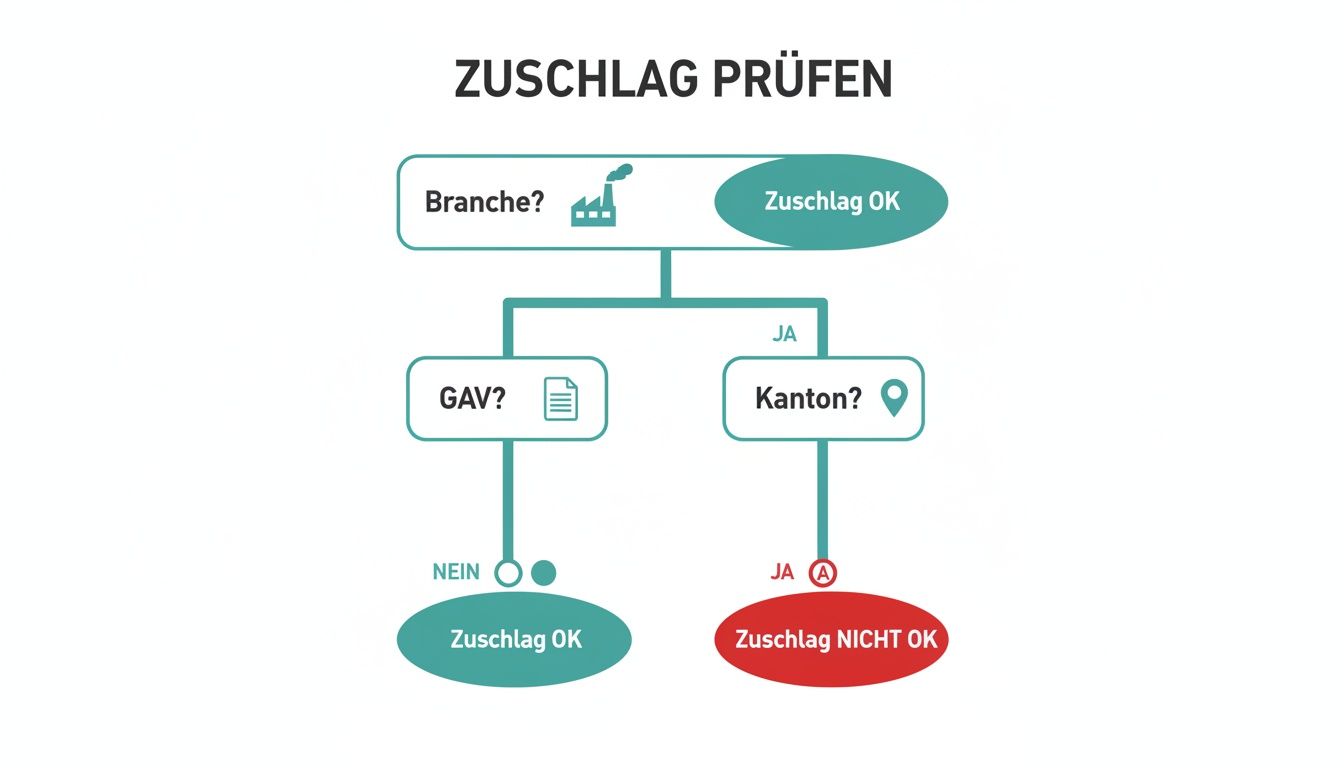
The Labour Act is the foundation; your industry CEA and cantonal holiday rules often decide the real amount. Gastronomy, security, events and hotels commonly have more detailed and more favourable rules. Our article on the L-GAV for gastronomy explains one important example.
Because public holidays differ by canton, a night shift in Zurich may be treated differently from one in Bern or Ticino. Modern workforce tools such as job.rocks store CEA rules and cantonal calendars so supplements are calculated automatically.
Calculate your night supplement
Formula: hourly wage × night hours × supplement rate = additional earnings. If you earn CHF 32.00 and work 7 night hours with a 25% supplement, you receive CHF 56.00 extra, for a total of CHF 280.00 including the base wage.
| Scenario | Working time | Hourly wage | Rate | Extra pay |
|---|---|---|---|---|
| Night shift | 23:00–06:00 | 30.00 | 25% | 52.50 |
| Mixed shift | 20:00–04:00, 4 night hours | 35.00 | 20% | 28.00 |
| Night + holiday | 22:00–05:00 | 26.00 | 75% | 117.00 |
Exceptions and special cases
Senior executives and some scientific or artistic roles may be outside the standard working-time rules. Young people and pregnant or breastfeeding women receive stricter protection; in many cases night work is prohibited or only possible with explicit consent.
Checklist for planning and payroll
- Store the correct CEA night periods and rates.
- Respect rest periods and maximum weekly working time.
- Record start, end, breaks and handovers without gaps.
- Check payroll for night, Sunday and holiday hours.
A guide to efficient shift planning helps connect these points.
Frequently asked questions
When does night work start?
Legally at 23:00 and it ends at 06:00, unless your CEA expands the period.
Is compensation always paid in cash?
No. Temporary night work is usually paid with a wage supplement; permanent night work is compensated by time off unless a CEA provides otherwise.
Do irregular night shifts count?
Yes. The type of compensation depends on the annual frequency.
What if I work at night on a holiday?
Supplements may add up, depending on your CEA.
job.rocks stores your CEA rules, calculates supplements automatically and helps ensure error-free payroll. Discover more at https://job.rocks.