
How many working hours are there in a month? Calculate exactly 2026
How many working hours are there in a month? With a 40-hour week, it's 173.33 hours. Find out the exact calculation method for budget, shift planning and payroll in Switzerland here.
At a 40 hour week in Switzerland has a month mathematically 173.33 working hours. This value arises from 40×4.333 and is good for annual planning, but it can be too imprecise for exact monthly billing because working days and cantonal holidays vary from month to month.
This is exactly where most mistakes happen in practice. You plan with a smooth average, but the month has fewer or more working days than expected, and in the end neither the target/actual comparison nor the salary preparation fit together neatly. Especially in catering, events, security or flexible employee pools, an average value alone is not enough.
So if you ask yourself, How many working hours are in a month, you don't just need a number, but the appropriate calculation method. For budget, forecast and annual framework you take the average. For shift planning, monthly target hours and payroll, you calculate exactly according to the calendar.
Why working hours fluctuate per month
A typical mistake looks like this: The team is planned for a month with a fixed target, even though there are fewer working days in the calendar or an additional holiday slips in. On paper, the operational planning is correct. In reality, negative hours, overtime or queries from payroll accounting accumulate.
The problem is not the question itself, but the false expectation behind it. Many people are looking for a single month number. For Switzerland is 173.33 hours at 40 hours per week a useful average. For an individual month, this is often only half the story.
What causes the fluctuation
The monthly hours change mainly due to three things:
- Different number of working days. A short month brings fewer target hours than a long one.
- Cantonal holidays. What is a normal working day in Zurich may be free in another canton.
- Shift models and flexible assignments. In events, catering or security, services are rarely paid equally.
If you bill monthly hours with an annual logic, discussions arise almost automatically.
Anyone who has to manage seasonal workload knows this particularly well. You need more people during peak times and fewer people during quieter weeks. The article also shows how you can plan such phases properly seasonal peaks without an agency.
What works in practice
For me the rule of thumb is clear: Average for planning, calendar for billing. Everything else seems convenient at first, but later costs time with corrections, queries and recalculations.
The simple average method with the 4.333 factor
If you need a quick monthly value, this is it 4.333 factor the simplest method. In Switzerland, the monthly working hours are full-time 40 hours per week × 4.333 = 173.33 hours calculated. The factor results from 52 weeks divided by 12 months and smoothes out the uneven month lengths, like the contribution from Gastronomic about monthly working hours in Switzerland describes.
This is how you calculate the average
The formula is simple:
Weekly hours × 4,333 = average monthly hours
Practical example:
- 40 hours per week result 173.33 hours per month
- This value is suitable if you are planning annual budgets, rough personnel requirements or cost frameworks
If you work with monthly budgets, this is useful. This allows you to calculate quite stable without having to roll up each individual month separately.
What the method is good for
The average method is particularly suitable in these cases:
- budgeting. You need a constant planned value over the year.
- Comparison of full-time models. A team with identical contracts is easier to compare.
- First use in forecasts. You want to quickly see how much work there is to do.
To get an overview of typical monthly values, it is also helpful to take a look at the average working days per month.
Practice rule: If you just want to know what you can roughly expect in the year, the factor is enough. If you bill a specific month, it is not enough.
Where the error begins
As soon as you use the average to derive monthly wages, target hours or shift loads for a specific calendar month, things get tricky. No month has exactly 4,333 weeks. The value is even less appropriate if public holidays are different in a canton or if your team does not work in consistent weekly blocks.
I often see the same pattern in security services and healthcare: The Operations planning initially runs with a smooth monthly value, the corrections come later via overtime lists and queries from payroll processing. This is unnecessary. The average is a planning value, not a replacement for the real monthly calculation.
Accurate calculation based on actual working days
If you want to set up a clean monthly statement, there is no other option calendar-accurate calculation over. You count the actual working days of the month, subtract relevant holidays and multiply the result by the daily target time.
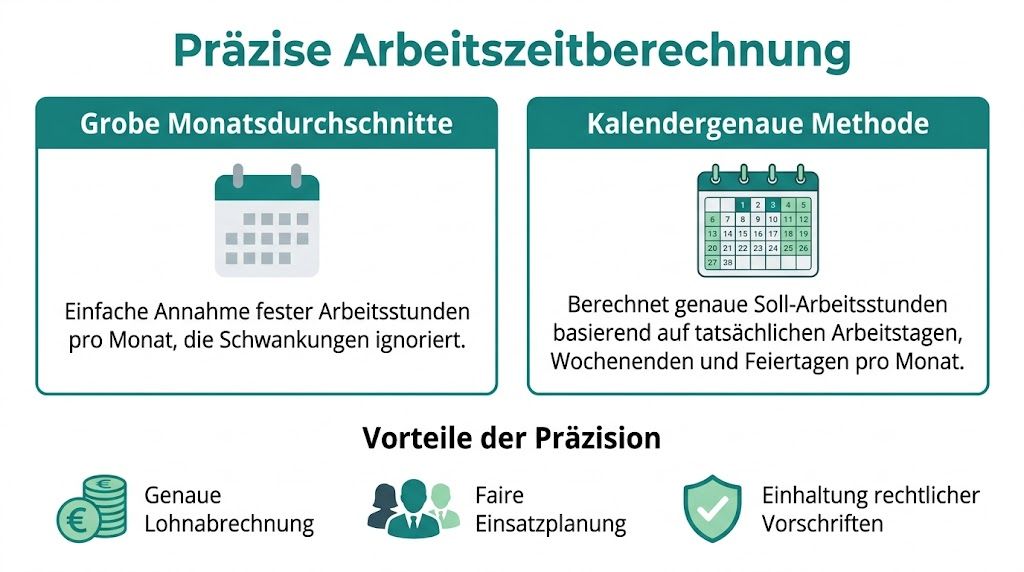
The formula for the real monthly value
The calculation is:
Working days per month × daily target working hours
In a 40-hour week with five working days per week, you usually work along 8 hours per day.
Practical example:
- Has a month 19 working days, you come up 152 hours
- Has a month 23 working days, you come up 184 hours
It is precisely this range that is mentioned for flexible employee pools in Swiss industries such as security or logistics. The monthly working hours vary depending on the calendar 152 and 184 hours with a 40 hour week. Months with more working days also increase the risk of overtime 15%, which leads to violations of flexible models ArG §9 with a maximum of 50 hours per week can lead. The official guidelines for maximum working hours in Switzerland can be found at SECO — State Secretariat for Economic Affairs, How Arbeitsrechts.de on working days per month performs.
Why this method is useful in shift operations
Hardly anyone in events, catering or security works strictly according to a regular monthly pattern. You have weeks with high loads and weeks with fewer missions. If you then have to pay attention to cantonal holidays, the average logic quickly overturns.
This method gives you three things that you really need in everyday life:
- Clean target hours per month
- Fair planning for each employee
- Less disputes with hourly accounts
If you want to know how many days you can schedule in a specific month, it helps to take a look at them working days per month.
A short month is not simply a smaller picture of the long month. He needs his own bill.
Direct comparison
| Month type | working days | Target time of day | monthly hours |
|---|---|---|---|
| short month | 19 | 8 h | 152 hours |
| longer month | 23 | 8 h | 184 hours |
This creates differences that are often underestimated in everyday life. Anyone who works with a fixed average here only shifts errors from planning to billing.
Annual working hours as a reliable basis for planning
If you lead teams throughout the year, looking at the month alone is often not enough. For many companies this is Annual working hours the better leadership size. This means you don't just see a single peak or a short month, but the total load in the calendar year.
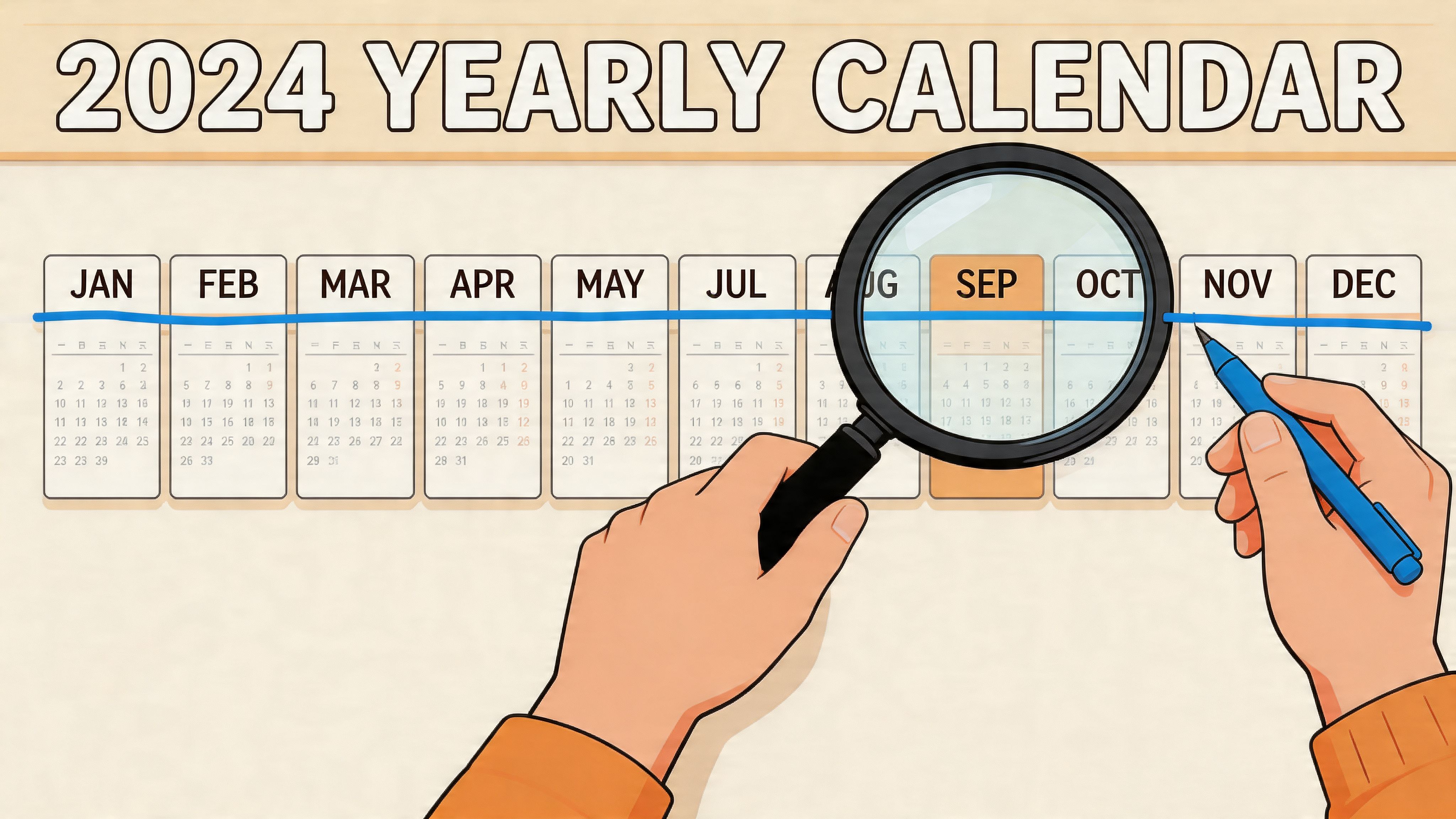
For a classic five-day week, one month is on average 21 working days. The calculation behind it is: 365 days minus 104 weekend days minus 9 public holidays = 252 working days per year, divided by 12 months, like Studyflix explains the working days per month.
Why the annual perspective is often fairer
A single month can be deceiving. One month there's a lot going on, the next there's a lot less going on. If you only look at monthly values, the utilization rate quickly appears unsettled, even though the year as a whole can be easily planned.
With an annual account you can:
- Distribute tips better
- compensate for quiet phases
- Do not evaluate overtime in isolation, but rather over the course of the year
This goes well with the hotel industry, event locations and agencies with seasonal waves. A month with many missions does not immediately become a conflict as long as compensation is provided for in the annual account.
Where annual working hours really help
Let’s take a team in a wedding location. From spring to autumn the load is significantly higher than in winter. If you rigidly insist on monthly values, you will have to constantly make corrections. With annual working hours, you can plan more generously in the busy half of the year and build in relief in quieter phases.
Another advantage: you have conversations with employees on a comprehensible basis. Not every week has to look the same. It is crucial that the distribution over the year is clearly documented.
This video gives a good overview of the idea behind calculating working hours and monthly planning:
Those who only control the month often react late. If you think ahead to the year, you plan more calmly.
The limit of this approach
Annual working time does not replace the monthly bill. For payroll, target hours in a specific month and holiday logic, you still need the exact monthly analysis. The annual value helps you manage and distribute the load. It does not solve the obligation to bill each individual month correctly.
Impact on payroll and deployment planning
This shows whether your calculation is viable. If the target value for a month does not match the calendar, subsequent errors almost always arise. Some companies only notice this when employees question their hourly accounts. Others see it earlier because shifts are poorly staffed or payroll needs to be reworked.
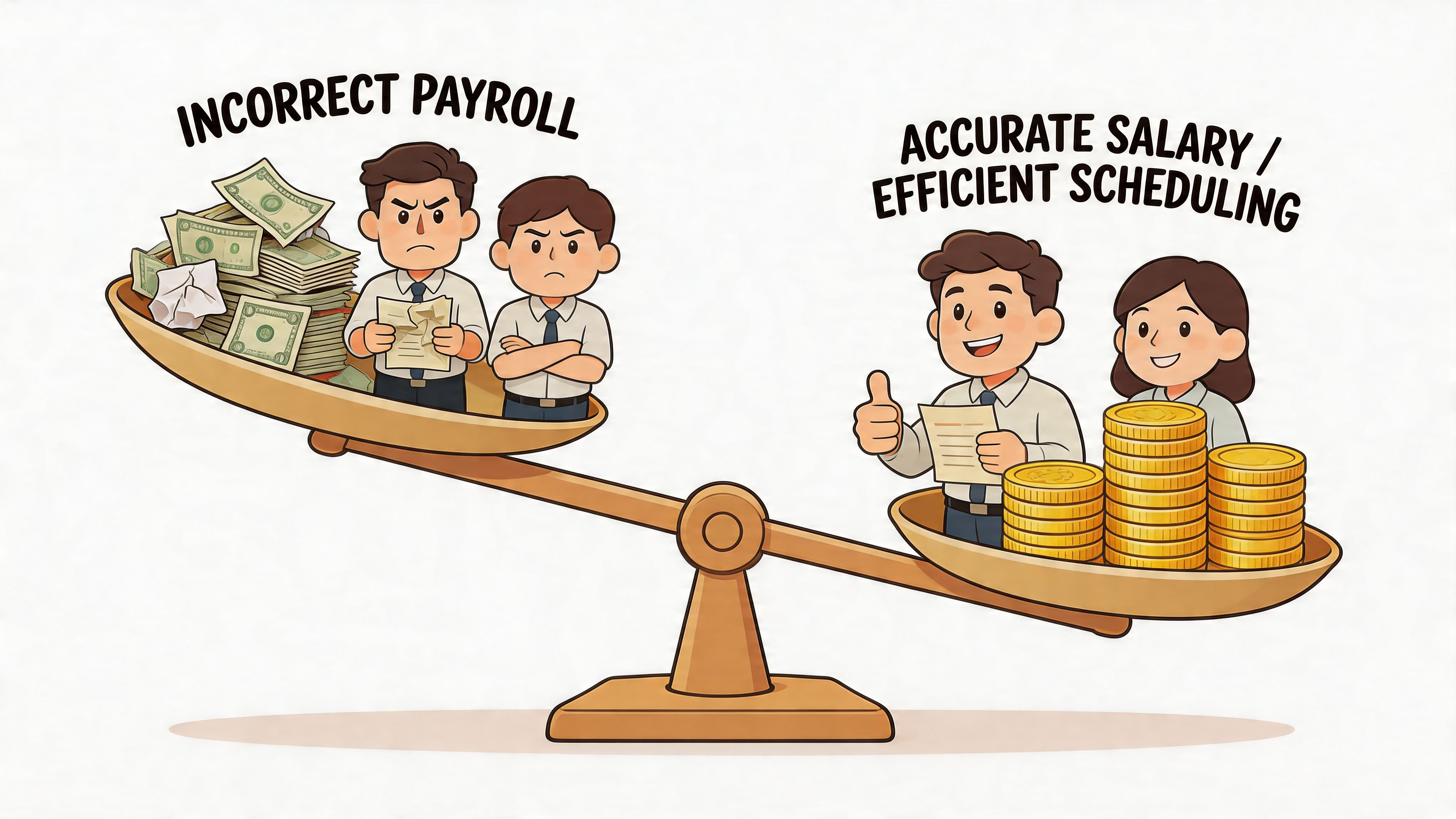
Incorrect monthly values have a direct impact on wages
If you calculate an average even though the month had fewer working days, a correctly worked month suddenly seems like a minus. Conversely, a long month can lead to hidden extra hours that are only noticed later.
There is something else for Switzerland: Calendar changes and holidays. CH-specific changes may increase the monthly working hours 8 to 16 hours reduce. As an example, the guide from Ordio to working hours per month the February 2026 with 19 working days. It also mentions that gig workers often 15 to 20% variable work and rigid factors therefore reach their limits.
Typical damage in everyday life
These errors occur particularly often:
- Wage corrections after month-end closing. Payroll has to follow up because target and actual do not match.
- Poor planning at peak times. You use too few people and the team is overloaded.
- Too many staff in weaker weeks. Services are busy even though the real need lies deeper.
In hospitality or security services, all it takes is one incorrectly assessed holiday for the monthly planning to be upset. This seems small, but often results in several subsequent errors.
Why rigid tables are no longer enough
A standard table is of little use to you, especially with flexible work schedules. If employees are available irregularly, you need monthly target values that fit the calendar and the contract. Otherwise, neither the rostering nor the subsequent wage logic is clean.
With variable stakes, the average is not the problem. The problem is treating it like an exact value for a specific month.
Who How many working hours are in a month If you want to answer correctly, you must always ask the follow-up question: For budget or for billing? This distinction prevents many mistakes even before the first roster.
What incorrect monthly values really cost you
The error starts small — an average value that is incorrect for a specific month. The consequences add up:
| Source of error | Consequence | Typical effort |
|---|---|---|
| Average instead of calendar exact | Target-actual deviation for each short or long month | 1-2 hours of correction per month per team |
| Holiday not taken into account | Incorrect hourly billing, queries from payroll | Half an hour of clarification per incident |
| Part-time work at a flat rate | Overtime or minus hours that are not contractually agreed | Forensic workup upon discharge |
| Annual working hours without monthly control | Overtime builds up unnoticed | Controlling expenses at the end of the year |
These costs are not visible as long as no one asks. However, as soon as employees check their hours or payroll accounting asks questions, the effort becomes measurable.
Smart tools for automated hour management
Manual calculations become tedious when there are multiple locations, changing shifts or many part-time profiles. Excel can do a lot, but Excel does not automatically warn you if a holiday has been handled incorrectly or if a target value does not fit the contract model.
What a good system has to absorb
The average monthly value of approximately 174 hours for a 40-hour week based on the factor 4,35 is useful for budgeting. For exact billing you need the actual working days in the month, which is loud Factorial to monthly working hours is particularly important with variable shift models.
A useful tool should therefore not only collect hours, but also check:
- Contractual weekly hours
- specific working days per month
- Public holidays in the appropriate canton
- Target/actual comparison per employee
- comprehensible handover to wage preparation
What works in practice and what doesn't
A simple table often works for a small core team with fixed days. It quickly changes as soon as workers, freelancers or part-time models join in. Then someone maintains holidays manually, someone copies formulas into new months, and somewhere a value shifts.
Workforce management software eliminates exactly these sources of error for you. This also includes job.rocks. The platform creates availability, Shift planning, Time tracking and wage preparation in one process. This is helpful for companies with flexible employee pools because hours are not only recorded, but also checked against target values during ongoing operations.
My practical advice for tool selection
When choosing, don’t look for pretty dashboards first. Rather check these questions:
- Can the system clearly map holidays and monthly logic?
- Can a different contract model be defined for each employee?
- Is the hourly history traceable for queries?
- Can Payroll handle the exported data without rework?
If you solve these points properly, the effort involved in planning and billing will be noticeably reduced. Not because of magic, but because fewer manual intermediate calculations are necessary.
Quick test: Which calculation method do you need?
Answer these three questions. The right method appears almost automatically:
| Ask | If yes | If no |
|---|---|---|
| Do you need a planned value for the annual budget? | Average method (4.333 factor) is sufficient | On to the next question |
| Do you have to bill for a specific month? | Calendar-accurate calculation based on working days | On to the next question |
| Do you control flexible pools all year round? | Annual working hours as a benchmark + calendar-accurate billing per month | Average is enough as long as you don't bill per month |
FAQ – Frequently asked questions about calculating working hours
Many questions only arise when the first monthly statement doesn't match your gut feeling. The following overview clarifies the points that most often cause discussions in teams.
The most frequently asked questions compactly
| Ask | Answer |
|---|---|
| How many working hours are there in a month with 40 hours per week in Switzerland? | As an average 173.33 hours about the factor 4,333. To bill for a specific month, it is better to calculate based on the actual working days. |
| Is the average value suitable for payroll? | Just as a rough guide. For the individual month, the calendar-accurate invoice is cleaner. |
| How do I calculate a month exactly? | You take the actual working days of the month and multiply them by the daily target working hours. |
| Why do monthly hours fluctuate so much? | Because months have different numbers of working days and public holidays can vary depending on the canton. |
| What applies to part-time? | You calculate according to the same principle, only with the contractually agreed weekly hours or the appropriate daily target time. |
| Do annual values still make sense? | Yes, for working time accounts, seasonal planning and the distribution of workload over the year. |
| What is important for flexible assignments? | You need monthly values that match the calendar and the individual contract. Rigid average values lead to errors more quickly. |
Three edge cases that are often overlooked
Part-time with irregular days
If someone doesn't work on fixed days of the week, a flat monthly value is rarely enough. You then need a clear rule as to how target hours are distributed and checked against real assignments.
Overtime in long months
Long months quickly seem like extra personal effort, even though some of it is already off the calendar. Without a correct target value, you will evaluate overtime incorrectly.
Cantonal holidays
As soon as teams work in several cantons, you have to differentiate clearly. A holiday is not automatically relevant for everyone.
Accurate working time calculations are not complicated. It only becomes complicated when average, contract and calendar are mixed.
If you plan flexible teams and want to put hours into salary preparation without additional calculations, take a look job.rocks to. The platform supports you with availability, Shift planning, Time tracking and preparation for payroll. Monthly hours are constantly checked against the calendar so that you don't have to make corrections until the end of the month.
Calculation methods and legal bases checked on April 28, 2026. Information on working hours and public holidays refers to Switzerland.