
Coordinate temporary staff without stress: your practical guide
Before you even give a thought to the first shift plan, it's time to take a step back. Coordinating temporary help doesn't start with an app, but with an honest inventory of your needs. You lay the foundation for stress-free planning by clearly analyzing when, where...
Before you even give a thought to the first shift plan, it's time to take a step back. Coordinating temporary help doesn't start with an app, but with an honest inventory of your needs. You lay the foundation for stress-free planning by clearly analyzing when, where and what you really need support for.
Laying the foundation for smooth planning
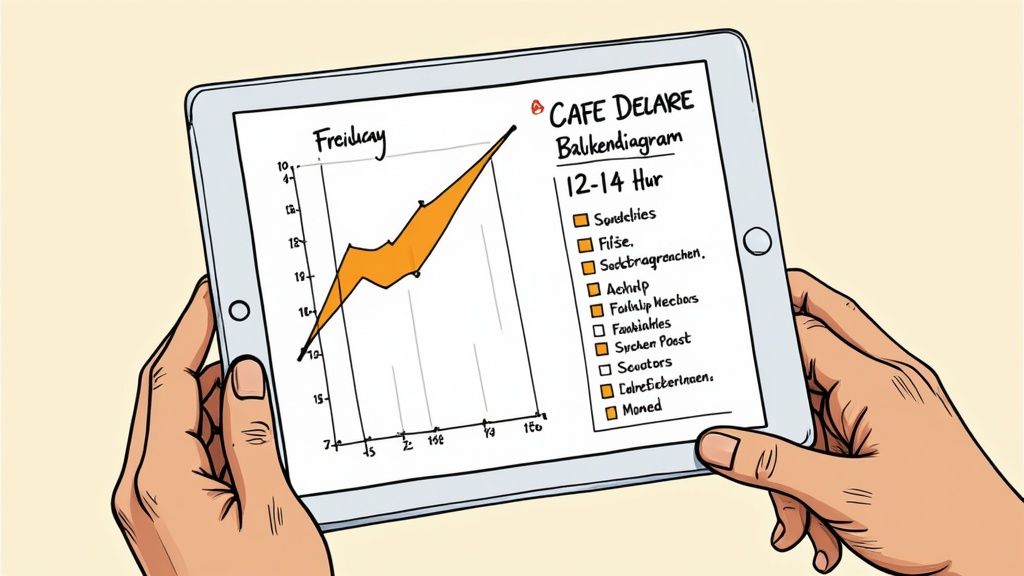
Far too many companies plan their staff purely based on gut feeling. This inevitably leads to two problems: either you have too many people on the payroll during quiet times or you don't have enough hands during peak times, which leads to pure stress and dissatisfied customers. A data-based needs analysis is your way out of this chaos.
Use data instead of guessing
Look at the data you already have. Your cash register software, your reservation system or your project management tools are real gold mines if you know what to look for.
Imagine you run a small café. Instead of booking a temporary worker for every Friday, take a look at your sales data for the last three months. Suddenly you see it in black and white: sales are 60% higher on Fridays between 12pm and 2pm than at any other time. This is your clear signal.
So you don't need reinforcement all day, but specifically for this two-hour window. It's that simple.
Create clear requirement profiles
As soon as you know when you need help, you have to define, which ones help you need. A clear requirements profile is not bureaucratic bells and whistles, but rather your most important tool for finding the right people for the right tasks.
Ask yourself specifically:
- Must-have criteria: Which skills are absolutely essential? In our café example, this would be the experience of using a professional portafilter machine. Without this ability, the temporary help during the midday peak is simply useless.
- Can criteria: What knowledge would be a nice bonus but not a dealbreaker? Perhaps some previous service experience or the ability to prepare small snacks.
- Soft skills: What personal characteristics are important? Do you need someone who can keep a cool head under pressure, or do you need someone who proactively approaches customers?
A precise requirements profile not only saves you a lot of time when making your selection, but also ensures that your temporary workers bring real added value from day one. You're not just looking for "a temporary worker", but "a barista assistant for the Friday lunch peak".
This small but important difference is the key to successfully coordinating temporary workers. You avoid misunderstandings, set expectations clearly from the start and ensure that your planning is based on facts, not assumptions. With this solid foundation, all of the following steps – from the availability query to the final shift planning – become significantly easier.
Easily query availability and plan shifts cleverly
Probably the biggest hurdle in coordinating temporary workers? The constantly fluctuating and difficult to plan availability. But before you get lost in endless email chains or confusing WhatsApp groups, take a deep breath. With the right tools and a clear strategy, this process becomes much easier.
The goal is simple: you need a central, always up-to-date overview of who can work and when. Instead of starting from scratch every week, you create a reliable database that makes planning much easier.
The right tools for your needs
The days of paperwork and Excel tables that no one maintains anyway are definitely over. Today there are a whole range of digital helpers that can do the tedious work for you. Depending on the size of your team and the complexity of the planning, a different solution is suitable.
- Shared calendars (like Google Calendar): A simple and, above all, free method. You create a calendar in which your temporary workers enter their available and blocked times. This works great for small teams with few shift changes.
- Survey tools (like Doodle): Ideal for quick, targeted querying of specific appointments. You simply create a survey for a specific week or event, and each temp fills in when they can. No frills, simple and direct.
- Specialized planning apps: If you regularly create complex shift schedules, it's worth looking at a professional solution. Such apps bundle everything in one place: availability queries, shift planning, communication and often even time recording.
An overview of various tools to collect the availability of your temporary workers easily and centrally.
Comparison of tools for availability queries
| Tool | Advantages | Disadvantages | Ideal for |
|---|---|---|---|
| Shared calendar | Free, widely available, easy to set up. | Confusing with lots of people, no planning functions. | Very small teams (<5 people) with simple structures. |
| Survey tools (Doodle) | Fast for ad hoc queries, clear overview for specific time periods. | Not suitable for recurring planning, no central database. | Individual events, short-term projects, one-off queries. |
| Specialized software | Everything in one place, automates many processes, GDPR compliant. | Chargeable, requires training. | Regular, complex shift planning, medium to large teams. |
No matter which tool you choose, the key is to find a process that everyone uses consistently.
A transparent and fair process when assigning shifts is the be-all and end-all for a motivated team. If your temporary workers have the feeling that their wishes are being taken into account and the planning is understandable, satisfaction and reliability increase enormously.
Create a flexible and fair shift schedule
A good shift plan is so much more than just a seamless staffing. It must be flexible enough to respond to short-term changes and fair enough so that no one feels disadvantaged. A real sticking point is often the distribution of unpopular shifts - such as late evening hours or weekend shifts.
Imagine you run a small fashion store. Instead of always putting the unpopular Saturday evening shift on the same people, introduce a simple rotation system. Each temporary worker takes on this shift in turn. This way the burden is distributed fairly. At the same time, you can take wishes into account by facilitating exchange offers within the team. You can also find more tips on this in our guide intelligent shift planning.
In Switzerland, coordinating temporary workers is often a little easier, as multiple employment is widespread and legally regulated more easily. Many people are specifically looking for short-term assignments alongside their main job, which gives you as an employer greater flexibility when planning your deployment. The hiring and release of part-time workers is less strictly regulated compared to other countries.
A crucial factor is also to plan a buffer for unforeseen failures. Have a small list of temporary workers ready who you know are flexible and can often step in at short notice. A small bonus for such spontaneous assignments can work wonders and save your day in stressful situations.
How clear communication prevents daily chaos
A perfectly developed shift plan is worthless if the communication behind it fails. I have experienced too often how misunderstandings, forgotten shifts and short-term cancellations arise not from poor planning, but from unclear agreements. Think of authoritative and precise communication channels as the lubricant that keeps your day-to-day operations running smoothly.
When coordinating temporary workers, you need to ensure one thing: Each person must be crystal clear about what is expected of them before the start of their shift. And that goes far beyond just the time.
Information that every temporary worker needs
Before someone starts their shift, the following points should be made absolutely clear:
- Exact task: Instead of a vague "help in the store" Better say: "You are responsible for receiving goods and putting them away in the warehouse today."
- Direct contact person: Who should the temporary worker contact first if they have questions or problems? "Report directly to Sabine at reception when your shift begins."
- Special features of the day: Are there special promotions, a huge delivery or an important event? "Attention, today we are expecting a tour group 2 p.m. Please be prepared."
This infographic gets to the heart of the simple but extremely effective process for successful shift planning.
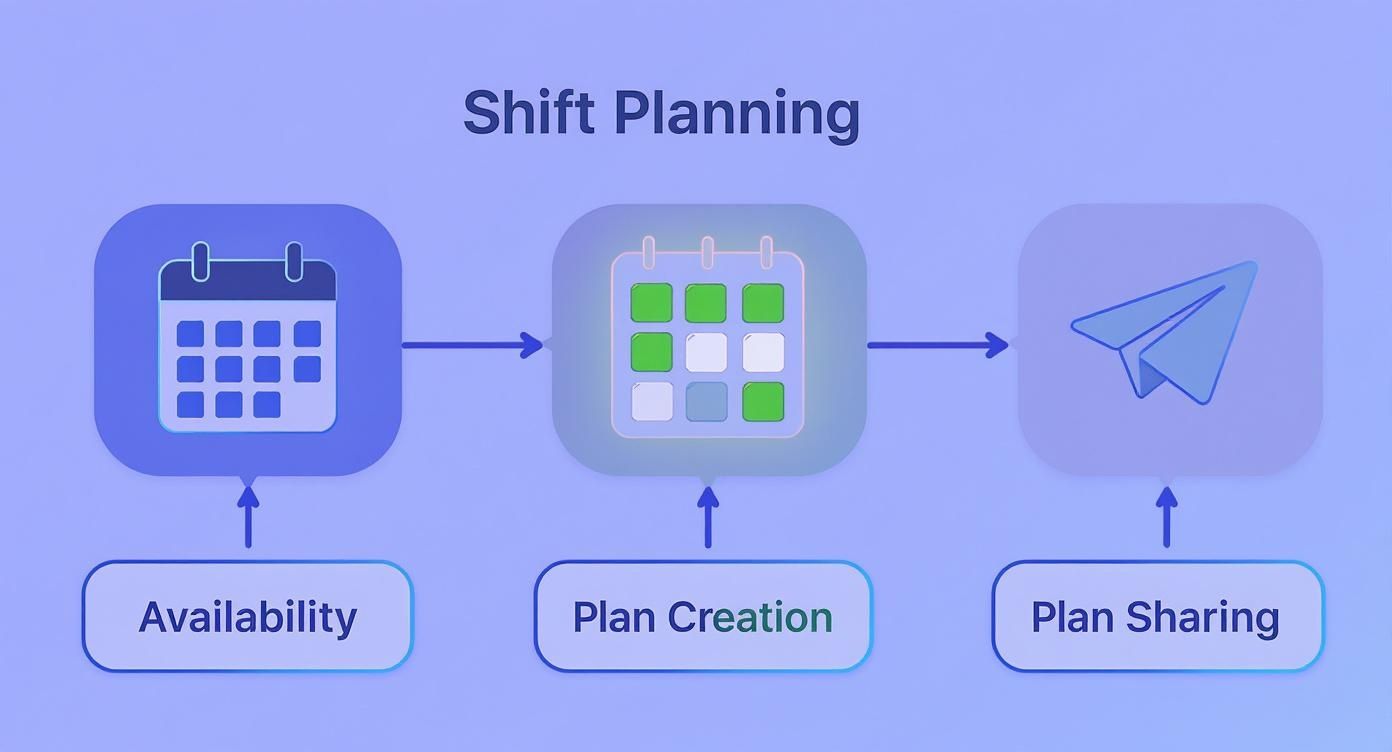
The visualization makes it clear: A successful assignment always starts with a clear query of availability and only ends with active confirmation by the temporary worker.
The coordination of temporary workers is playing an increasingly important role in the Swiss labor market. This is also reflected in the constantly growing number of private employment agencies. Good operational planning requires not only organizational skills, but also an understanding of the legal circumstances. More on the topic You can find recruitment agencies in Switzerland at de.statista.com.
Use templates for clear announcements
Avoid vague requests that leave a lot of room for interpretation. Get into the habit of using clear templates that contain all important information at a glance. This saves countless queries and prevents errors.
Bad request: "Who can work tomorrow?"
Good request: "Search for tomorrow (Tuesday, June 18th) by 10 a.m. to 2 p.m a representative for the cash register. Please register by today 6 p.m directly with me."
Or when it comes to taking over a shift:
"I have to start my shift on Friday (June 21st). 4-8 p.m give away. Who from the cashier team can take over? Please sort this out between yourselves and let me know who is doing the shift by Thursday afternoon."
A central communication channel is crucial. Whether it's a dedicated chat group or a channel in your planning app, choose a platform where only organizational topics are discussed. This way, important information doesn’t get lost in the general chatter.
This clear structure in your communication creates reliability. Your temporary workers know exactly what is expected and you can rely on your messages being received and understood. This significantly reduces the daily coordination effort.
Master legal aspects and correct time recording
When you coordinate temporary workers, you have more than just organizational responsibility - there are also a few legal rules involved. But don't panic, you don't have to be a lawyer to do this. It's about knowing a few basic points that will give you and your team the security you need.
The absolute foundation for fair and clean collaboration is the correct recording of working hours. In Switzerland, this is not a nice gesture, but a clear legal obligation.
Recording working hours is not an option, but a must
You must be able to provide complete proof of every hour worked, including breaks. This may sound like bureaucracy, but it is your best protection against wage disputes and gives your temporary workers the security that their work is actually billed correctly.
Forget about complicated systems. A simple timesheet or an intuitive app is often completely sufficient. The only important thing is that the start, end and breaks of each operation are documented transparently and comprehensibly. You can find a solid system for this in our guide modern time recording and time tracking.
Clean time recording is your best insurance. It creates trust and prevents most discrepancies in payroll from the outset. The small effort at the beginning will potentially save you a lot of trouble later.
Employment statistics show that many temporary workers are employed, especially in service industries. When coordinating, you must therefore keep an eye on the requirements of the Working Hours Act, which in Switzerland has a maximum weekly working time of 45 to 50 hours prescribes. You can find more details about statistics directly from the Federal Statistical Office (BFS).
Data protection explained briefly and succinctly
There are also a few simple rules when it comes to data protection. Of course, you collect and store personal data from your temporary employees - and of course you have to handle this carefully.
Just stick to these three principles and you'll be on the safe side:
- Data minimization: Only collect the data you really need for hiring and planning. Name, address and bank details are necessary. Hobbies or relationship status, however, are not.
- Safe storage: Whether digital or on paper, personnel files must be stored securely from unauthorized access. A lockable cabinet or a password-protected folder are an absolute must here.
- Earmarking: Only use the data for the purpose for which you collected it - i.e. for personnel administration and wage payments. Under no circumstances should you send advertising emails to the private addresses of your temporary employees.
If you keep these points in mind, you will create a professional and safe work environment. And that gives you the freedom to concentrate on what really counts: the smooth coordination of your temporary staff.
Develop emergency plans for emergencies
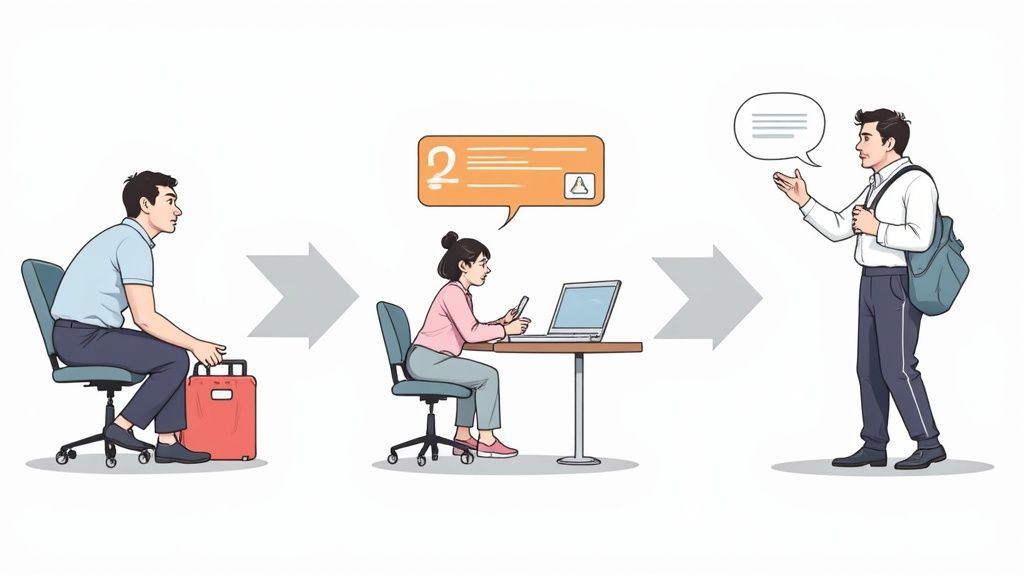
It's every planner's nightmare: 30 minutes Before your shift starts, your cell phone lights up – a sick note. Without a solid emergency plan, things like this can quickly become hectic, paralyzing the entire business process. Successfully coordinating temporary workers also means being prepared for the unexpected.
A functioning process for emergencies and replacements is therefore not a luxury, but an absolute necessity. It's about keeping a cool head even in stressful situations and remaining able to act immediately.
A clear schedule for emergencies
When a last-minute cancellation comes in, every minute counts. Define a crystal-clear process in advance so that everyone on the team knows exactly what needs to be done. This plan should immediately answer the critical questions:
- Who will be contacted first? Establish a fixed reporting chain. Is it the direct supervisor or the central planning office?
- How are replacement workers reached? Determine the fastest and most reliable communication channel. A direct call is often more effective than a message that might go unnoticed.
- Who makes the final decision? Clarify who approves the replacement shift to avoid double bookings or misunderstandings.
Such a structured approach prevents chaotic broadcasts and ensures that the gap is closed quickly and orderly.
The “Springer List” as a joker up your sleeve
One of the most effective practical methods is the “Springer List”. This list includes temporary workers who you know are generally flexible and willing to step in spontaneously.
It is important to actively maintain this list. Talk to these temporary workers regularly and ask about their current willingness. This way you can make sure that your jokers actually sting in an emergency. To keep motivation high, you can also create small incentives.
A small bonus for stepping in at short notice - be it a slightly higher hourly wage for this particular shift or a voucher - can work wonders. It shows your appreciation and significantly increases their willingness to help you out of trouble.
A practical example from the catering industry: A restaurant manager has a separate WhatsApp group just for emergency shifts. In the event of an outage, he posts the open shift there with all the details. Whoever makes a binding commitment first gets the stake. A special one can be used for such cases Software for short-term shift staffing further automate and simplify the process.
With a simple but clear process, you can ensure that even unexpected failures do not derail operations. You gain valuable time and can rely on your planning to hold up under pressure.
Anyone who regularly works with temporary workers knows this: the recurring questions that arise in everyday life and need to be clarified quickly. So that you don't have to ponder for long, I have summarized the most common stumbling blocks and the appropriate answers directly from practice for you.
How do I handle the allocation of shifts fairly?
The fair distribution of popular and unpopular shifts is a real balancing act and is often crucial for the mood in the team. The key is absolute Transparency. An open rotation system, in which everyone takes on the less popular assignments, creates a fair basis for everyone.
You can make the whole thing even more clever: Reward temporary workers who often step in flexibly and at short notice. During the next planning round, simply give them priority when it comes to choosing what they want. A quick "Thank you for being so spontaneous last time, this time you have the first choice" works wonders. Open communication about why you have chosen a certain distribution greatly promotes understanding and acceptance within the team.
Which simple tools are suitable for getting started?
You don't have to invest in expensive software right away. Especially at the beginning, free and simple tools are often enough to massively simplify the planning process and tame the initial chaos.
Here are a few tried and tested helpers to get you started:
- Shared Google Calendar: Perfect for a central overview. Everyone can enter their availability or blocked times themselves, and you can see everything at a glance.
- Doodle polls: The tool of choice if you need to quickly check availability for a specific period or a special event. Simple, fast and understandable for everyone.
- Dedicated chat group: Whether WhatsApp or Signal, set up a channeljust for organizational arrangements. This way, important information doesn’t get lost in the general chatter.
Do I have to record working hours for each temporary worker?
Yes, absolutely. This question comes up again and again, but the answer is unmistakable: there is one in Switzerland fundamental obligation to record working hours. This also applies without exception to temporary workers who work hourly wages. Even if someone only helps out for a single shift, you must document their working hours completely.
Clean and comprehensible time recording is not annoying paperwork, but rather your best protection. It creates trust, prevents discrepancies in payroll and protects you and your employees legally.
A simple timesheet that the temporary worker signs at the end of the shift or a simple app is sufficient. The only important thing is that the documentation is complete and correct. This ensures fairness and professionalism on both sides.
Are you ready to take your operational planning to the next level and reduce administrative effort to a minimum? job.rocks offers you all the tools you need for smooth coordination - from smart availability queries to automated wage preparation. Discover now https://job.rocksHow easy it can be to coordinate your temporary workers efficiently.